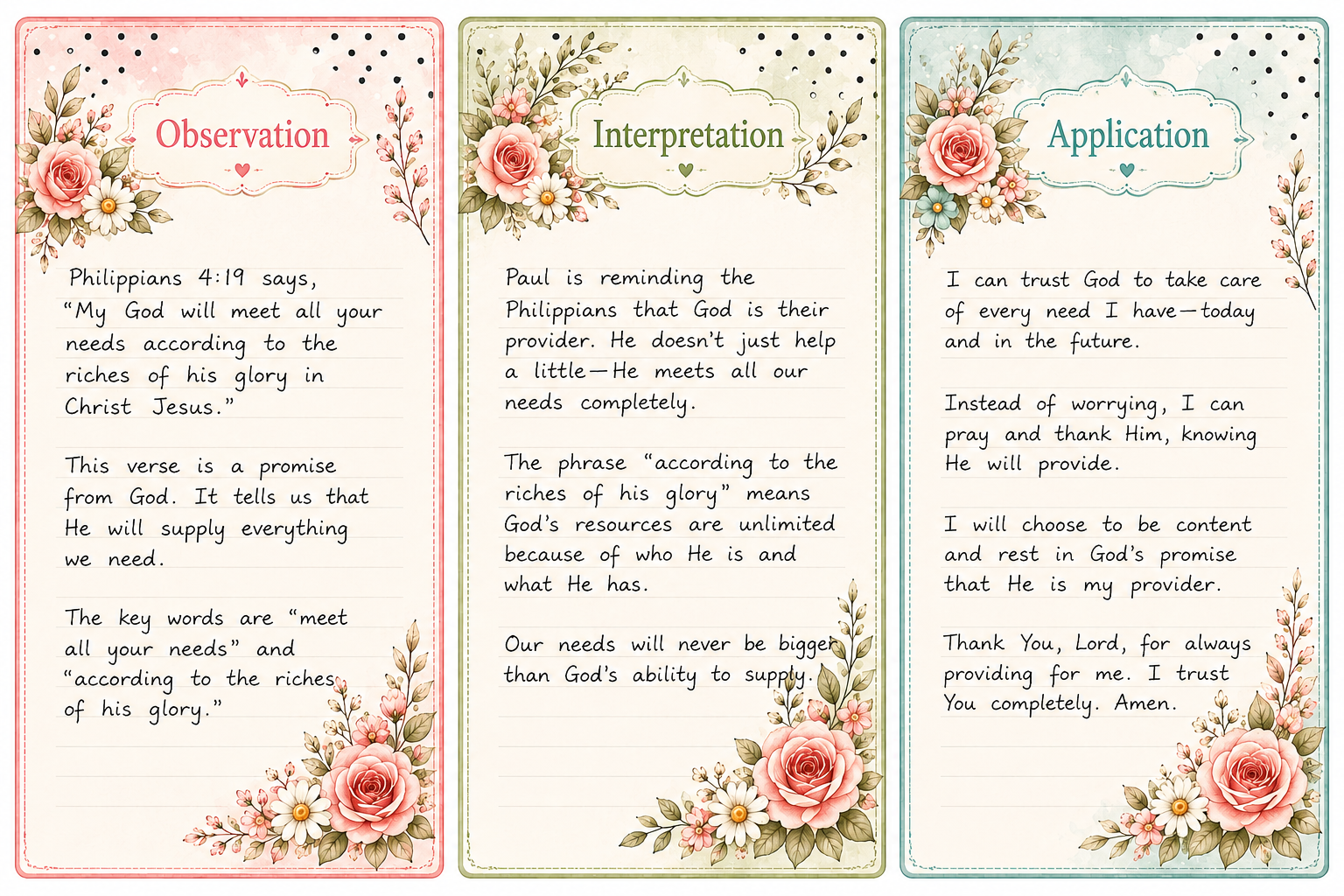
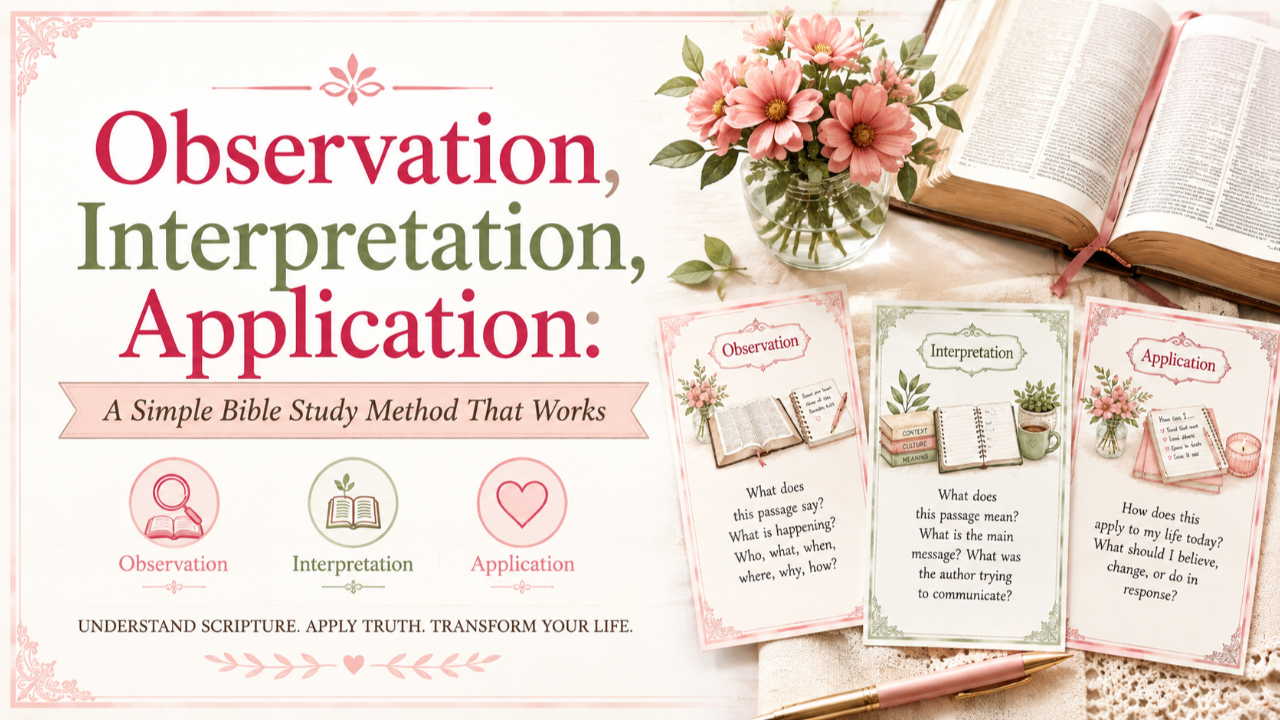
If you've opened one of my Bible study kits, you've probably noticed three cards tucked inside: Observation, Interpretation, and Application. They aren't decoration. They're a method — one I've relied on for years, and one I believe will change the way you read God's Word.
I first learned this approach about 25 years ago through a Precpet Bible study class taught by Kay Arthur. It was wonderfully simple, but it changed the way I approached Scripture. Instead of rushing through a passage, I learned to slow down and ask three important questions:
- What does it say?
- What does it mean?
- How should I respond?
All these years later, I still come back to those same three steps. That's why I include Observation, Interpretation, and Application cards in my Bible study kits. I want to give you a simple place to pause, think, pray, and truly interact with God's Word rather than simply reading it and moving on.
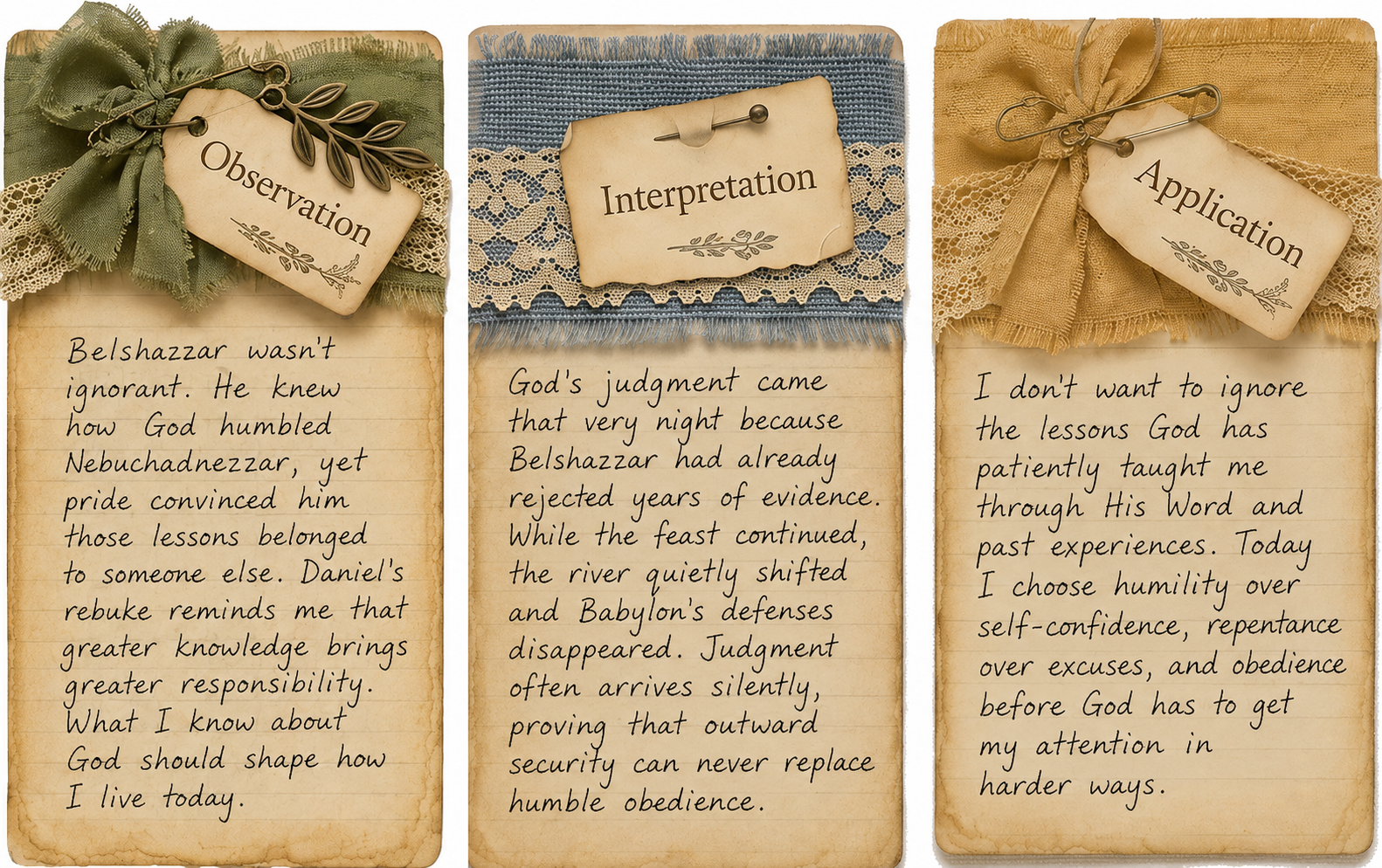
(Cards from the Exile Era Kit)
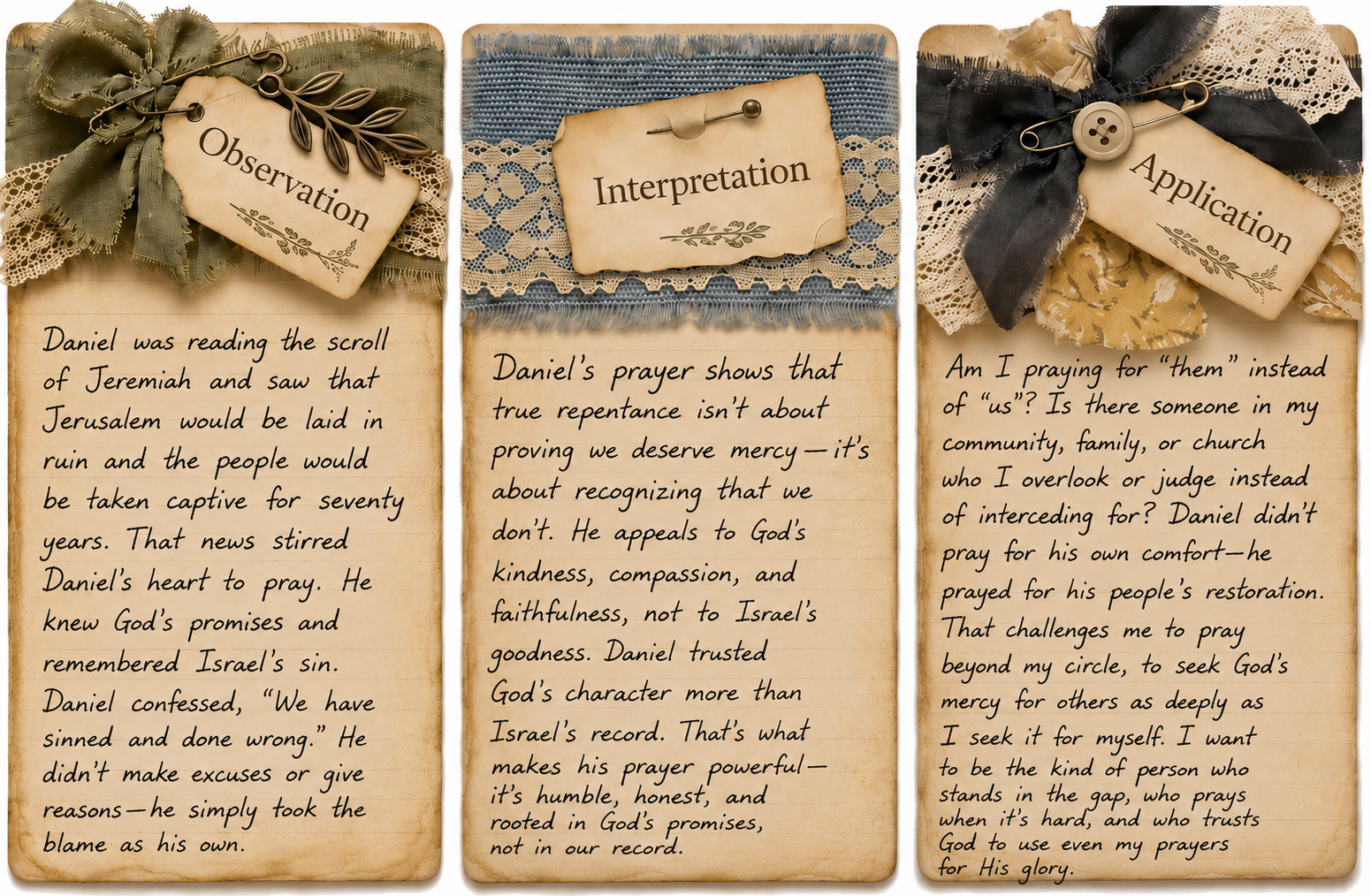
This method is called inductive Bible study. Simply put, it means we let Scripture interpret Scripture. Instead of starting with what a commentary says, or what we've always been taught, we start with the text itself and let the Holy Spirit guide us to its meaning.
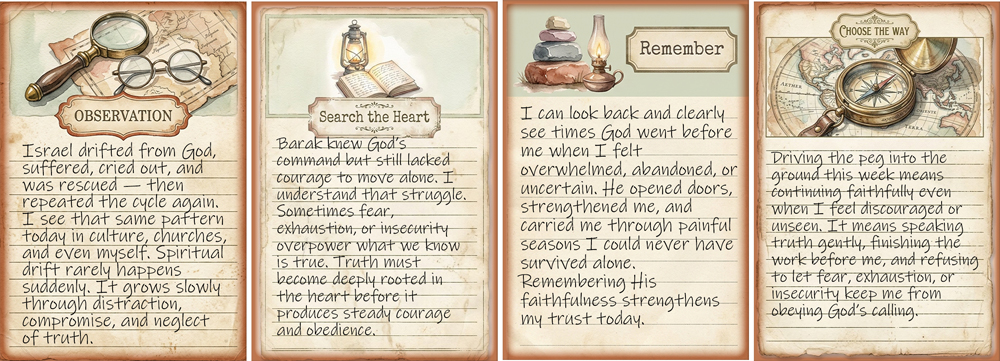
Occasionally I change up the titles (Observation, Interpretation, and Application) for a class to match the class theme, but they always include the same principles. (Cards from the Judges Era Kit)
Here's why each card matters, and why I want you to work through all three every time you open your Bible.
1. Observation: Slow Down and Look Closely
The Observation card comes first because looking closely is the foundation for everything else. Before we ask what a passage means, we need to see what it actually says.
Before I even study the verses themselves, I ask how this passage fits into its chapter, its book, and the whole story of Scripture. That takes time. It means reading around the passage, not just the passage. Skip this step, and it's easy to misread a verse or miss what the author was really doing.
Once I have that bigger picture, I look for the details: who, what, when, where, and why. Names. Places. Key action words. I take note of anything that stands out, then I dig a little into the history and culture behind it.
This matters more than we realize. We can't drop Bible events into our modern world before we understand them in their own world first. Imagine trying to explain a Tom Clancy novel to someone from the first century — without any concept of submarines, spy satellites, or the Cold War. It would sound like nonsense. The same is true in reverse. We have to meet the text where it lives before we ask what it means for us.
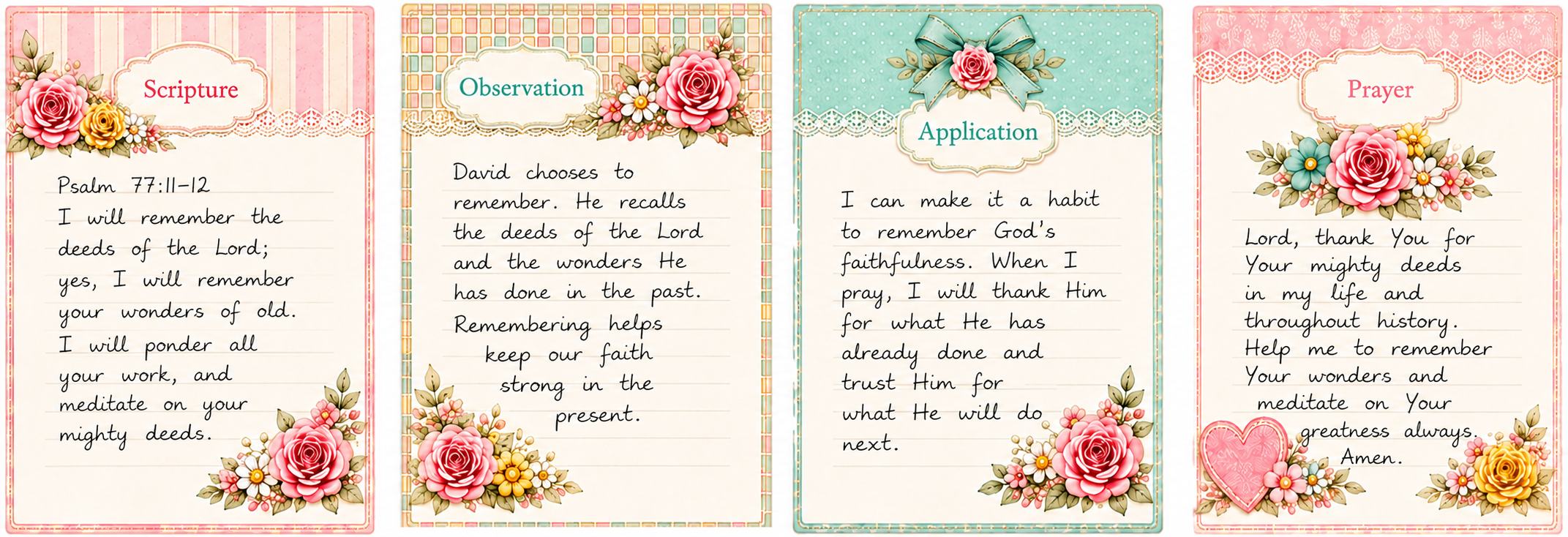
This is why the Observation card is the most important of the three. It protects you from confusion and from misunderstandings handed down by others. When you fill it out, you're not skimming — you're paying attention. (Cards from the Remember God's Ways Kit)
2. Interpretation: Discover What the Author Actually Meant
The Interpretation card is the one most often skipped — even by teachers. It's tempting to make a few quick observations and jump straight to "what this means for my life." But that shortcut leaves out something essential: what did the author mean when he wrote it?
The biblical writers weren't writing with us specifically in mind. They had one purpose and one meaning for their original audience. Our job is to uncover that meaning before we ever ask how it applies today. (Cards from the Return Era Kit)

Here's a good example. Romans 10:13-15 gets used often to urge Christians toward evangelism — as if someone's salvation depends on whether we personally share the gospel with them. It's a fine point to make elsewhere in Scripture, but it isn't what Paul was saying here. In fact, Romans 9-11 is actually explaining why the Jewish people, as a whole, were not readily receiving the gospel. Paul wasn't writing a call to evangelism in that passage — so we shouldn't teach it as one.
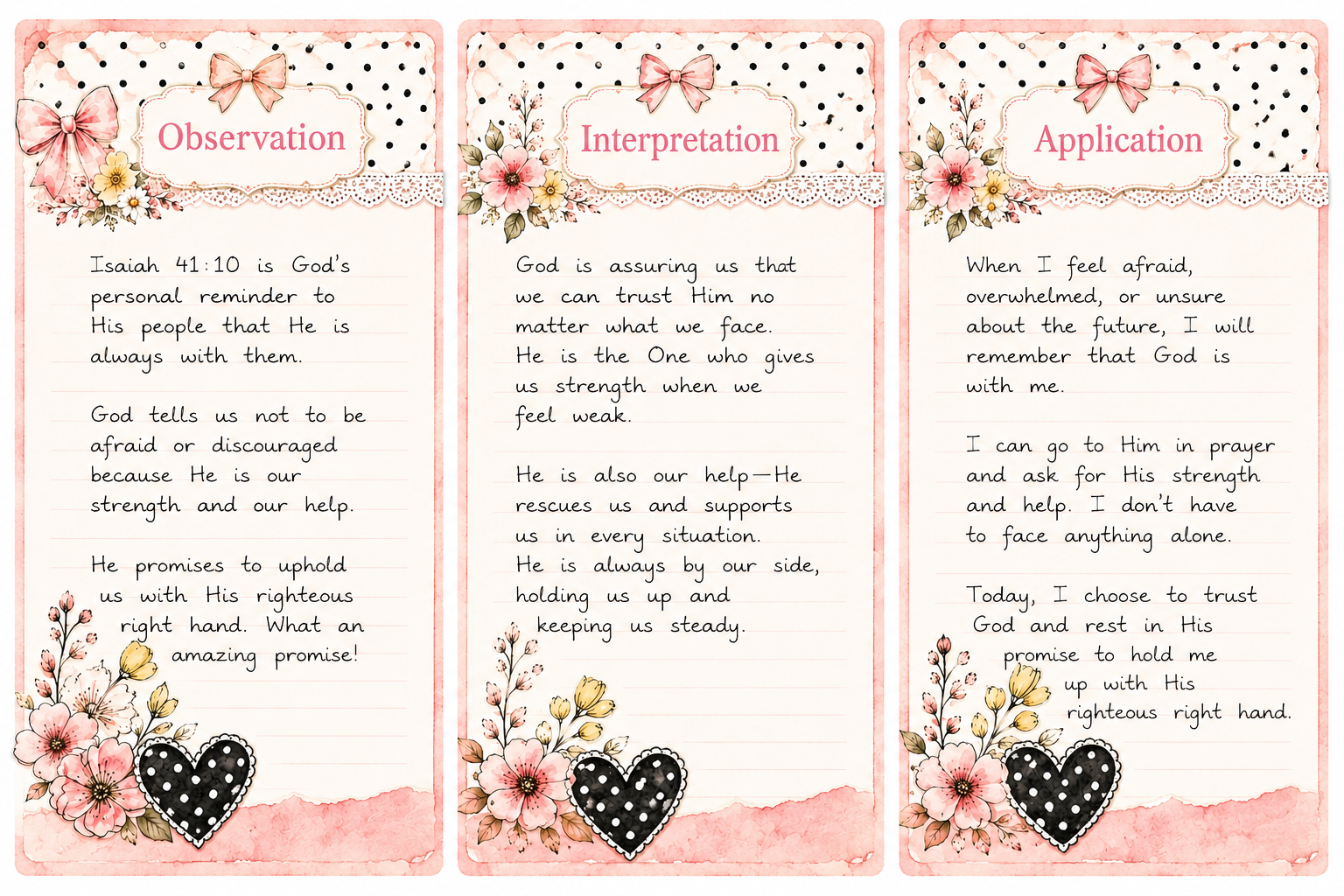
That's what the Interpretation card is for. It asks you to slow down and honestly ask: what was the author's actual argument? What did his first readers understand him to mean? Sometimes that answer challenges what we've always assumed — and that's okay. Sound interpretation matters more than familiar tradition. (Cards from Polka Dot Promises Kit)
3. Application: Let It Take Root in Your Life
Finally, the Application card asks the most personal question: now that I understand what this passage meant, what does it mean for how I live?
Not every passage needs a dramatic action step. Sometimes the Holy Spirit does quiet work in a heart that no card can capture. But most of the time, good teaching becomes good living when we let Scripture gently push us toward becoming more like Christ.
One thing I've learned: application works best when it points to common, honest struggles we all share — rather than only personal stories. When we do that, people see themselves in the passage, and the Holy Spirit has room to work in their own hearts, not just admire someone else's story.
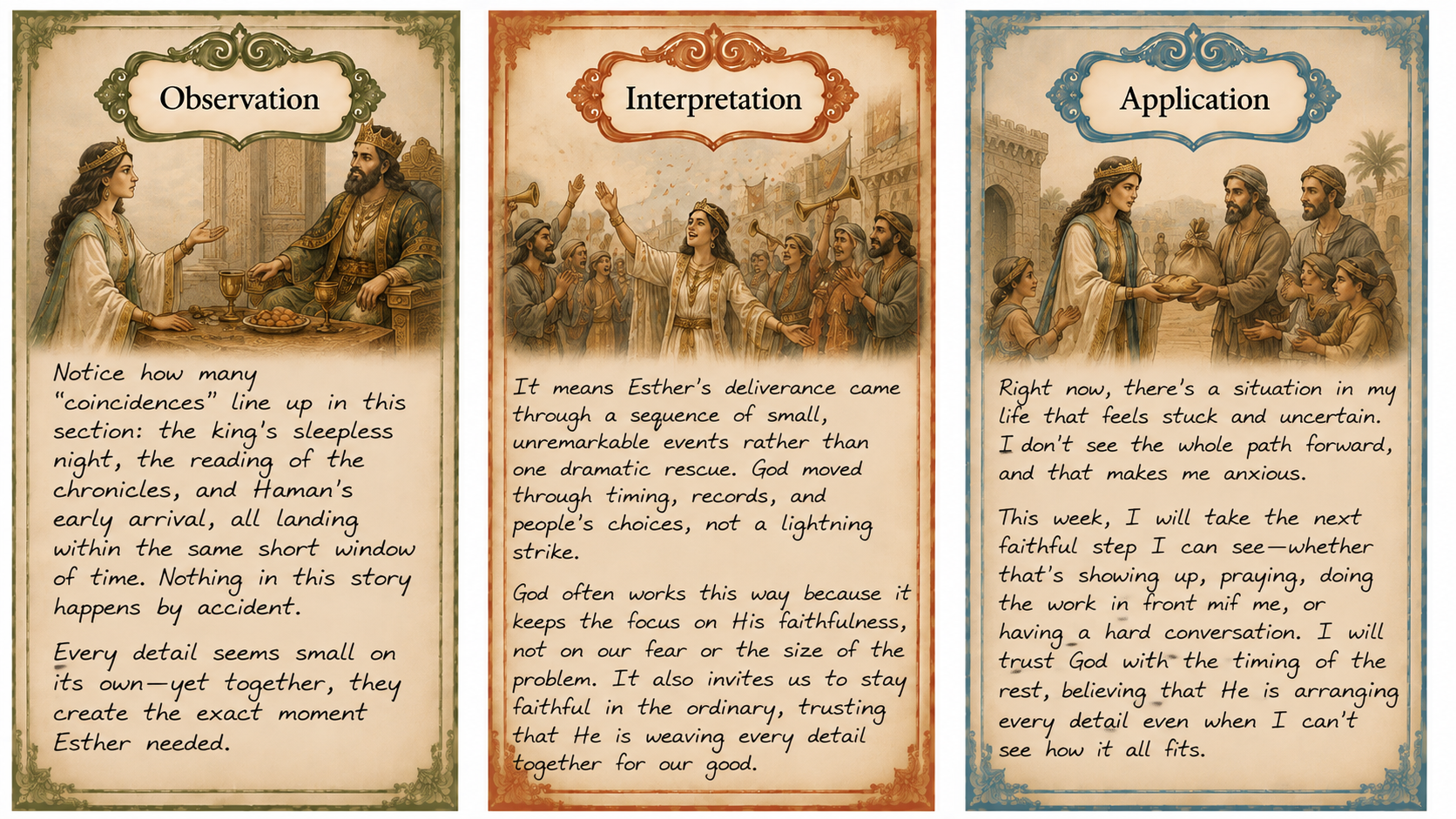
Application is often the hardest card for me to fill out. Observation and Interpretation come more naturally. But I keep working at it, because Scripture was never meant to stay in our heads. It's meant to reach our hands, our choices, and our relationships. (Cards from the Exile Kit)
Why All Three
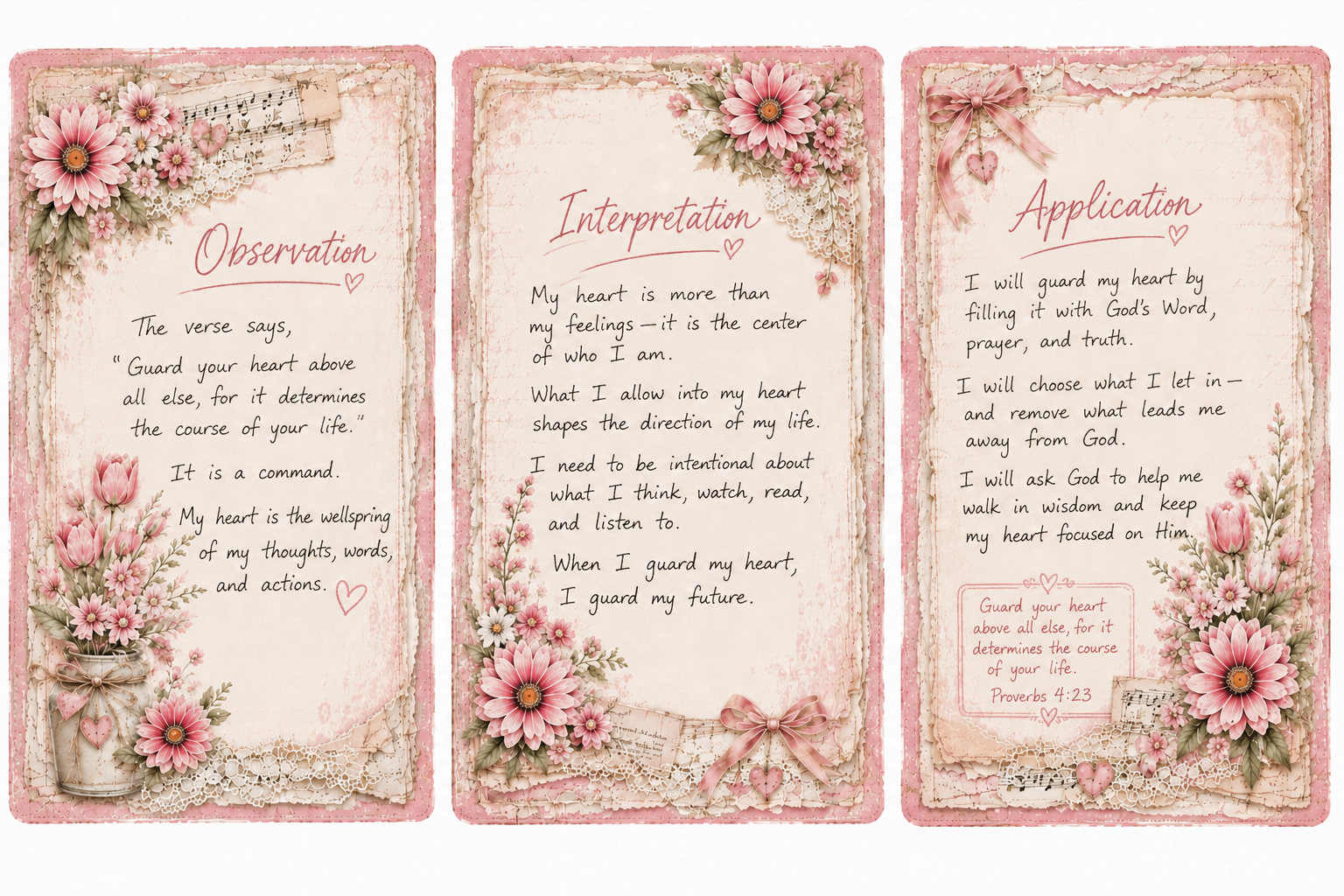
Each card builds on the one before it. Observation without Interpretation leaves you with facts but no understanding. Interpretation without Application leaves truth sitting on a shelf instead of changing a life. And Application without the first two steps becomes guesswork — well-meaning, but disconnected from what God actually said. (Cards from the Guard Your Heart Kit coming in September))
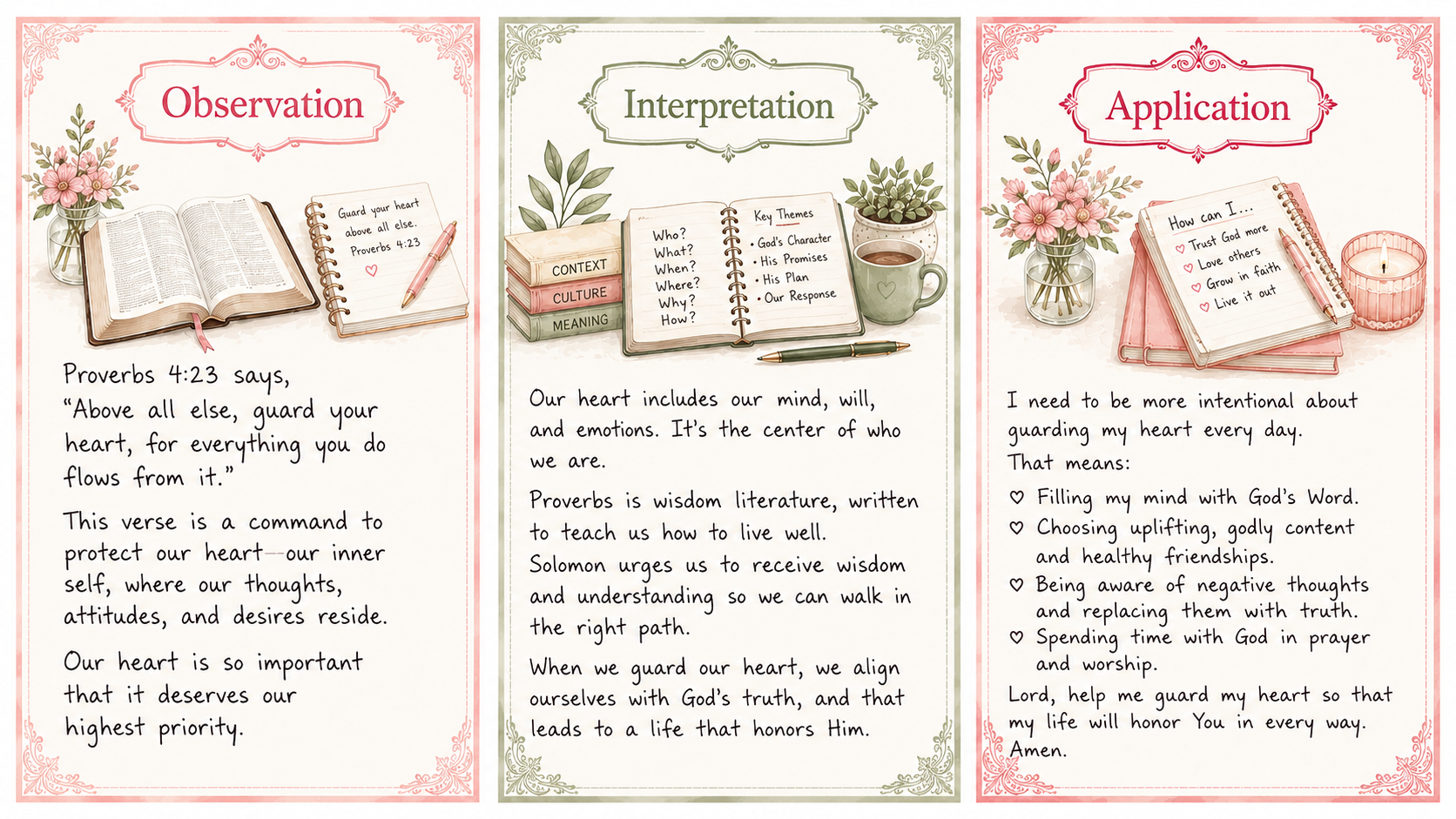
That's why I include all three cards (sometimes different titles) in every lesson. They're not busywork. They're a path — one that trains you to study Scripture for yourself instead of always depending on someone else's conclusions.
I hope these cards become a tool you return to again and again, long after this kit's pages are full. Studying God's Word for yourself is one of the deepest treasures available to you. My prayer is that these three simple cards help you find it.